Breaking Bread, The Origional Social Network
You Don't Need to Be a Chef to Gather Together

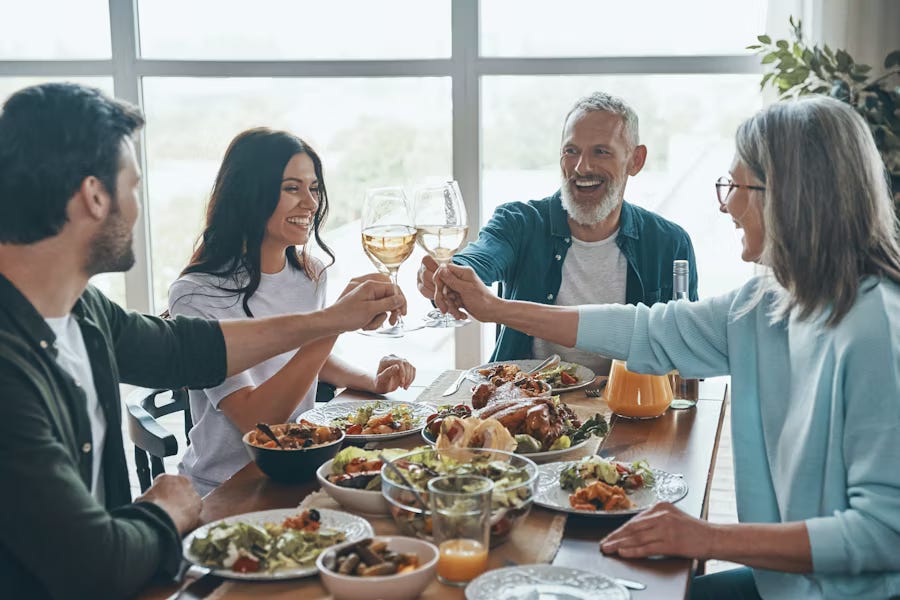
We’ve spent seven weeks exploring the loneliness crisis, how it started, what we lost, and where to find connection.
But today, I want to tell you about something humans have known for over two thousand years, something so simple and so powerful that nearly every culture on earth has built rituals around it.
Breaking bread together.
Sharing a meal isn’t just about food. It never has been.
A History of Connection
The phrase “breaking bread” goes back millennia. In ancient times, sharing food was an act of trust; you wouldn’t break bread with an enemy. The Last Supper, peace treaties, wedding feasts, holiday gatherings, every significant human moment has been marked by a shared meal.
Even the word “companion” comes from Latin: com (with) + panis (bread). A companion is literally someone you share bread with.
For thousands of years, humans have understood intuitively what researchers now confirm: eating together creates bonds that conversation alone cannot. When you share food, you’re sharing vulnerability, care, and time. You’re saying, “I made this for you. Sit with me. You matter.”
What Europeans Still Know
When I spent six weeks in Italy (as I told you in Post #5), I noticed something profound about how Europeans structure their days. Their lives revolve around food, not as fuel, but as a connection.
They go to the market daily, buying fresh ingredients, chatting with vendors who know them. They cook with intention, not speed. And then they gather, family, friends, neighbors around a table to share what they’ve made. Connection ensues.
Meals aren’t rushed. They’re a sacred time. Multiple courses, long conversations, children, and grandparents together, everyone present. No phones. No distractions. Just people, food, and the ritual of being together.
This isn’t reserved for special occasions. It’s daily life.
They haven’t lost what we’ve forgotten: that the table is where community happens. Where stories are told. Where loneliness dissolves into belonging.
What Americans Lost
Somewhere along the way, we traded this lovely, soulful ritual for convenience.
We grab drive-through meals and eat in our cars. We microwave dinner and eat in front of screens. We work through lunch at our desks. We convince ourselves we’re “too busy” to cook, too tired to gather, too stressed to host.
Cooking became a chore we resent rather than a practice we value. Meals became fuel stops rather than gathering points.
And we wonder why we’re lonely.
I’m not blaming anyone. Modern American life is exhausting. Time is scarce. Energy is limited. I get it, I really do.
Many nights, I stare into my refrigerator and sigh. I don’t feel like cooking, I say like a spoiled child, but once I start, a nice dinner emerges on my dinner table, and I’m delighted I didn’t listen to my tired self.
But here’s what I’ve learned from running a coffeehouse for 25 years and from watching how Europeans live: It doesn’t have to be complicated to be meaningful.
Simple is Enough
You don’t need to be a chef. You don’t need fancy recipes or expensive ingredients or a pristine home. You need to be willing to gather people around something you’ve made with your own hands.
Let me tell you what works:
Soup, bread, and dessert. That’s it. Simple, affordable, adaptable. My Indian friend told me that when unexpected friends arrive, we add more liquid to the Dal. I smile as I recall Salma’s words.
Make a big pot of soup, vegetable, lentil, minestrone, chicken noodle, whatever you like. Buy good bread from a bakery (or heat a baguette from the grocery store). Pick up a simple dessert, fruit, and cookies, store-bought pie, whatever feels easy.
Invite 3 or 4 people. Not a crowd. Just a few.
Set the table. Light a candle if you want. Put out napkins.
Serve the soup in bowls. Pass the bread. Pour drinks: water, wine, tea, whatever you have. You can ask your guests to bring a drink they prefer. This brings down the cost.
Sit together. Talk. Laugh. Let the meal linger. That’s it. That’s the magic formula that’s worked for two thousand years.
Adaptable for Everyone
Worried about dietary restrictions? Don’t be.
Make a hearty vegetable soup; it’s naturally vegan if you use vegetable broth. Add beans or lentils with rice for protein. Serve with crusty bread check the label for vegan options) Fresh fruit for dessert.
This recipe has been my go-to for decades: pasta with Marinara sauce (most tomato sauces are vegan). Add a big salad, garlic bread, and a simple dessert. Done.
Here is that simple, adaptable recipe.
Heat a large pan of water with a tablespoon of salt. Keep it simmering while you prepare the sauce. For extra sauce, add two cans of Italian Peeled Tomatoes. I always make two. Marinara sauce can be used in so many ways.
One 28 oz. can of Italian San Marzano peeled whole tomatoes.
In a large bowl, squeeze them for Chunky, or blend for smooth. In a medium saucepan, heat fresh chopped garlic in 2 tablespoons of good-quality olive oil, stirring and sautéing until lightly golden. Remove the pan, let it sit a minute so the oil won’t jump out. Add the tomatoes, salt and pepper, a pinch of red pepper flakes, fresh basil, oregano, or any herb you like. Heat slowly for about 15 to 20 minutes. Then add a tablespoon of sweet, grass-fed butter. Most people don’t know how delicious it is to add butter to tomato sauce.
Make the salad while the sauce is cooking. Heat the bread. Voila. Dinner. Then perhaps a store-bought dessert or ice cream.
The food doesn’t need to be complicated. It needs to be made with care and shared with intention.
Why It Works
Here’s what happens when you cook for people and invite them to your table:
You’re offering care. Cooking for someone says, “I thought about you. I made time for you. You’re worth this effort. Your home, your table, your hospitality, it’s an environment where people can relax and be themselves.
You’re slowing down. A shared meal forces everyone to sit, to be present, to put phones away. In a world that never stops rushing, this is radical.
You’re building a ritual. When this becomes a regular practice, monthly dinners, weekly gatherings, it becomes something people count on, or they will create dinner for you. A rhythm that defeats loneliness.
You’re remembering something ancient. When you break bread together, you’re participating in a practice that connects you to every human who’s ever sat around a fire, a table, a meal, and said, “You belong here with us.”
Start Small
Don’t overthink this. Don’t wait until your house is perfect or your cooking is impressive or you have the “right” dishes.
This week, try this:
Pick a date in the next two weeks and invite 3 or 4 people for a simple meal. It doesn’t have to be dinner; brunch works too. Keep the invitation casual: “I’m making soup on Saturday. Want to come over around 6?”
Make something simple that you’re comfortable with. One pot of soup or pasta with sauce. Bread from the bakery. Simple dessert. Focus on the gathering, not the cooking performance.
The goal isn’t to impress anyone. It’s to practice the ancient art of breaking bread together. To remember that food shared creates a connection.
Europeans never forgot this. We can remember it too.
[NEXT WEEK PREVIEW - TO BE ADDED]
Until then, cook something simple. Invite someone over. Set the table. Light a candle. Break bread together.
It’s been working for two thousand years. It’ll work for you too.
We’re in this together,
🩷 Lulu
Next week: More recipes
I love LuLu’s post! In Biarritz, France, they have 3 to 4 hour lunches, better for digestion, and calms the stresses of the day.
One ritual I used to do with my co-workers is having dinner together every Friday night. It's something I gave up after I got married.
Thank you for sharing as a reminder how important connection is to address isolation and loneliness